
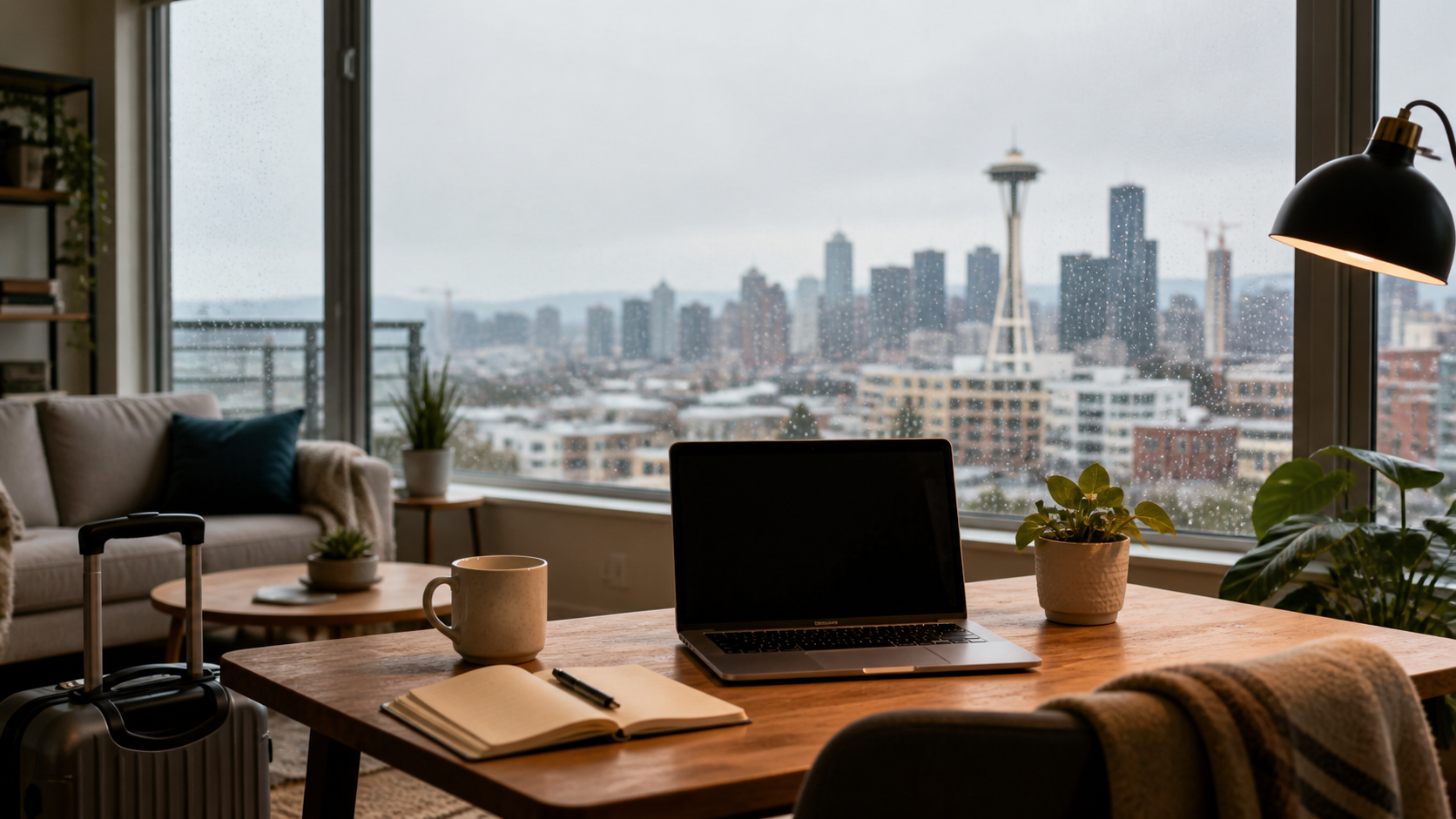
How Digital Nomads Can Find Housing in Seattle
Seattle can be a strong base for remote work if you choose the right neighborhood, work setup, and furnished stay. Here is how to make the search practical.
Seattle is one of those cities that makes remote work feel possible in several different ways. You can spend the morning on calls from a furnished apartment, take a lunch walk near the water, work from a library or cafe in the afternoon, and still be close to restaurants, parks, transit, and weekend trips.
But finding the right place to stay is not just about searching “Seattle rental” and choosing the prettiest listing. For digital nomads, the best housing choice depends on your work rhythm, stay length, neighborhood fit, internet needs, transit access, and how much flexibility you want.
This guide breaks down how to look for digital nomad housing in Seattle without getting lost in the options.
Start with stay length, not just price
Before comparing neighborhoods, decide how long you actually want to be in Seattle. A two-week trip, a one-month test stay, and a three-month remote-work base should be treated differently.
Seattle’s short-term rental guidance defines short-term rentals as stays of fewer than 30 consecutive nights, and operators must follow city licensing rules. For digital nomads, that makes the 30-plus-day stay an important line to understand. If you are planning to work from Seattle for a month or longer, a furnished monthly stay may be simpler than bouncing between nightly rentals.
A longer furnished stay can also make the real workweek easier. You are more likely to care about a real desk, reliable Wi-Fi, laundry, kitchen setup, noise level, and the grocery options nearby than about one photogenic corner of the apartment.
Know what Seattle costs before you fall in love with a neighborhood
Seattle is a high-demand rental market. Apartment List’s May 2026 Seattle rent report placed the city’s overall median rent at $2,049, with one-bedroom and two-bedroom medians listed at $1,912 and $2,386. Other rent trackers use different methods, but the direction is consistent: Seattle is not a bargain city, especially if you want a convenient, furnished, work-ready place.
That does not mean digital nomads should only chase the lowest monthly rate. A cheaper stay far from transit, groceries, or workspace can cost you in rideshares, delivery, lost time, and daily friction.
Choose the neighborhood around your work rhythm
Seattle neighborhoods feel very different from one another. The right one depends less on “best neighborhood” lists and more on how you work and live.

| Digital nomad priority | Seattle areas to consider | Why it can work |
|---|---|---|
| Walkability, cafes, nightlife | Capitol Hill, Belltown, Fremont | Good for restaurants, social energy, and errands nearby. |
| Tech-adjacent work trips | South Lake Union, Downtown, University District | Useful for meetings, tech offices, research, and central transit. |
| Quieter long-stay routine | Queen Anne, Green Lake, Wallingford | Better for remote workers who want calm after work. |
| Water, views, weekend feel | West Seattle, Ballard | Good when lifestyle matters more than being downtown daily. |
| Transit-first living | Capitol Hill, U District, Downtown, Roosevelt, Northgate | Can put you closer to Link light rail and easier city movement. |
For many digital nomads, transit access is the hidden make-or-break factor. If you do not plan to rent a car, being near a station or a strong bus corridor can matter more than having a larger living room.
Look for a work-ready furnished stay
A furnished apartment can still be frustrating if it is not set up for actual work. Before booking, ask for details that affect your week, not just your arrival day.
Ask about speed, reliability, and router location.
A dining table is not always enough for a month.
Check lighting, background, and noise.
A major quality-of-life upgrade for longer stays.
A usable kitchen helps avoid takeout fatigue.
Confirm key pickup, packages, elevators, and guest rules.
Use this simple housing decision framework
When comparing Seattle stays, score each option from 1 to 5 across five categories: work setup, neighborhood fit, transit access, stay flexibility, and total cost.
If a place looks beautiful but scores poorly on work setup and transit, it may be better for vacation than for digital nomad life. If a place is simple but scores high on routine, it may be the smarter base.
Where STAYOO fits in
Digital nomads usually need more than a room. They need a temporary home that supports work, rest, errands, and local exploration.
If you are planning a Seattle stay and want a furnished, work-friendly setup, start with your dates, neighborhood preferences, and work requirements. From there, it becomes much easier to match the right stay to the way you actually live.