
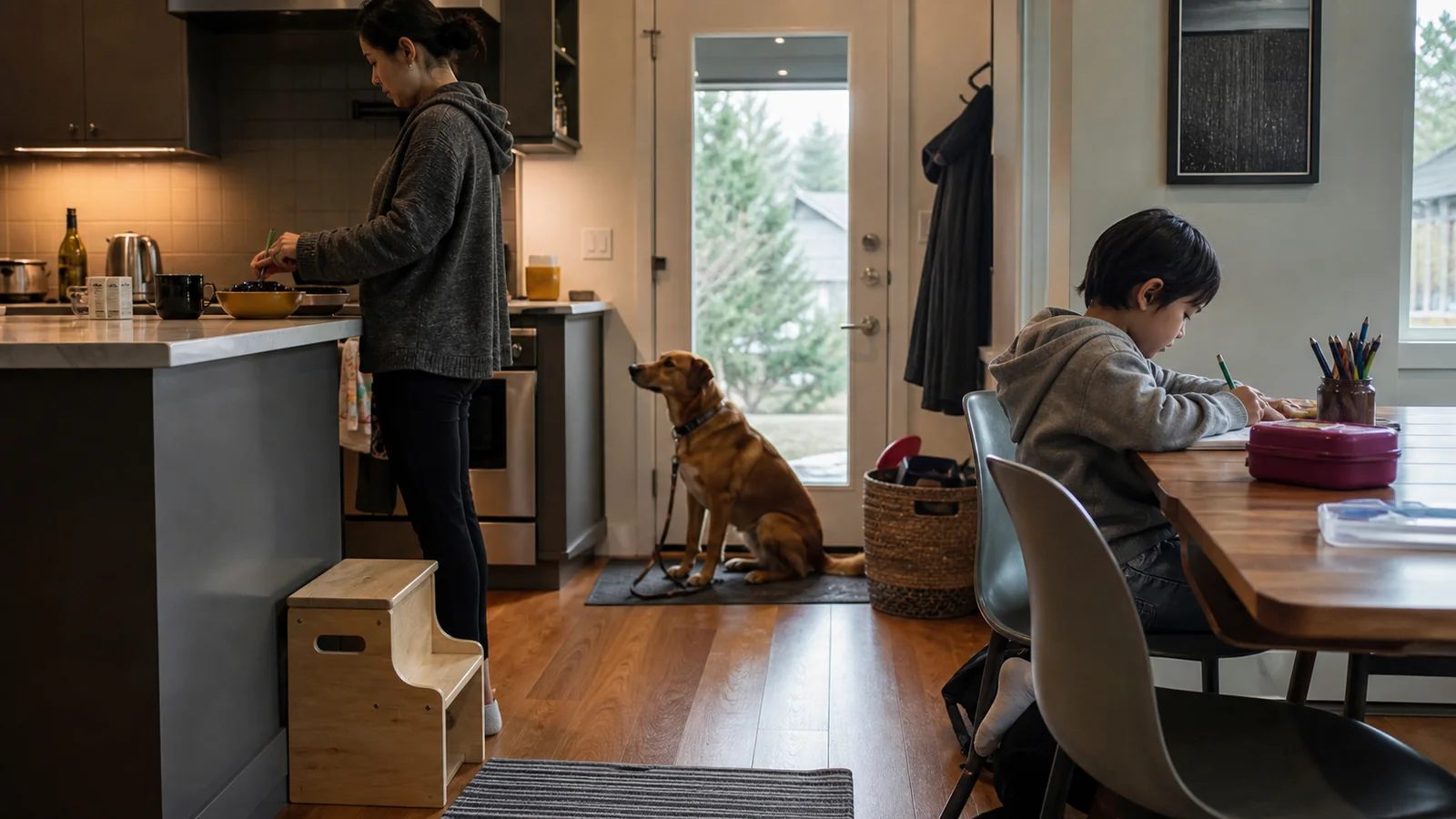
A former extended-stay hotel manager described families living for weeks or months in small hotel rooms with limited kitchens and shared public spaces. That observation is the starting point for looking beyond bed count. Original source · X · former extended-stay hotel manager
A listing can sleep five and still fail a family by breakfast.


What Families Need Beyond a Bed
A listing can sleep five and still fail a family by breakfast. Bed count does not tell you where a toddler plays, where the dog goes at 6 a.m. or whether anyone can close a door and work.
Families are often asked to compress a home into a checklist: bedrooms, beds, pets allowed.
Those fields matter. They miss the routine.
During a 30+ day displacement or relocation, the home has to absorb school mornings, meal prep, laundry, work calls, naps, pet care and the emotional weight of not being in the family’s own space. A technically sufficient rental can become exhausting when every task requires improvisation.
Family-ready temporary housing is not the home with the most amenities. It is the home with the fewest daily contradictions.
The short answer
For a month or longer, choose around four systems: sleep, food and laundry, school and work, and safe movement for children and pets. Confirm pet rules, stairs, outdoor access, shared spaces, kitchen equipment, noise and extension terms in writing.
If the stay is insurance-related, ask the adjuster which additional costs require approval and keep receipts for eligible extra expenses.
1. Plan sleep by person, not by maximum occupancy
“Sleeps six” may mean one bedroom, a sofa bed and two air mattresses in a common room. That can be fine for a weekend and unworkable for eight weeks.
Ask where each person will sleep every night. Consider naps, different bedtimes, night-shift work and whether a parent needs a private call after the children are asleep. Confirm blackout, street noise and sound between floors or units.
For infants, verify the exact crib or pack-and-play model and current availability. Do not assume a piece of child equipment shown in an old photo remains at the property.
2. Inspect the kitchen for the meals you actually make
A microwave, sink and small refrigerator may be described as a kitchenette. For a family cooking daily, ask about the number of burners, oven, freezer space, dishwasher, cookware, table size and pantry storage.
Furnished Finder’s guidance for displaced and relocating families highlights safety, laundry, kitchen function, family-appropriate furniture and sometimes school-district needs. Those are the practical reasons a furnished home can work better than adjoining hotel rooms.
3. Make laundry and storage concrete
Ask whether the washer and dryer are private or shared, which hours they can be used and whether they are reached by stairs or an exterior path. A weekly laundromat trip with children can add more friction than the listing reveals.
Look for places to put school bags, shoes, luggage, pet food, a stroller and work equipment. A home can be spacious and still have no available storage because every closet is locked.
4. Read “pet-friendly” all the way to the end
Confirm:
- Number, species and size restrictions.
- Pet fee, deposit and cleaning terms.
- Whether pets may be left unattended.
- Furniture and linen rules.
- Fenced versus shared yard access.
- The route from the unit to an appropriate outdoor area.
- Nearby noise or animals that may affect the pet.
A “fenced yard” may be shared. “Free street parking” may make the early-morning pet routine harder when carrying a child. Look at the whole movement pattern.
5. Test school, childcare and work together
Map the school or childcare route at drop-off time, the work commute and the backup plan when one adult has the car. If a school district matters, verify the address through the relevant district rather than relying on marketing language.
For remote work, ask where calls happen when children are home. A desk in a bedroom can be useful; a desk in the only play space may create daily conflict.
6. Reduce the chance of another move
If repairs or a closing date may slip, ask how an extension works before booking. A family with children and animals has more to pack, more routines to rebuild and fewer easy substitute properties.
For insurance stays, Washington’s Office of the Insurance Commissioner explains that loss-of-use coverage may include additional housing, food, laundry and mileage costs above normal expenses, subject to the policy’s terms and limits. Keep the housing plan aligned with the adjuster.
Sources and verification
Where the practical guidance comes from.
Official and established sources support the factual claims. Community discussions helped identify the questions people repeatedly ask; they were not treated as proof on their own.