
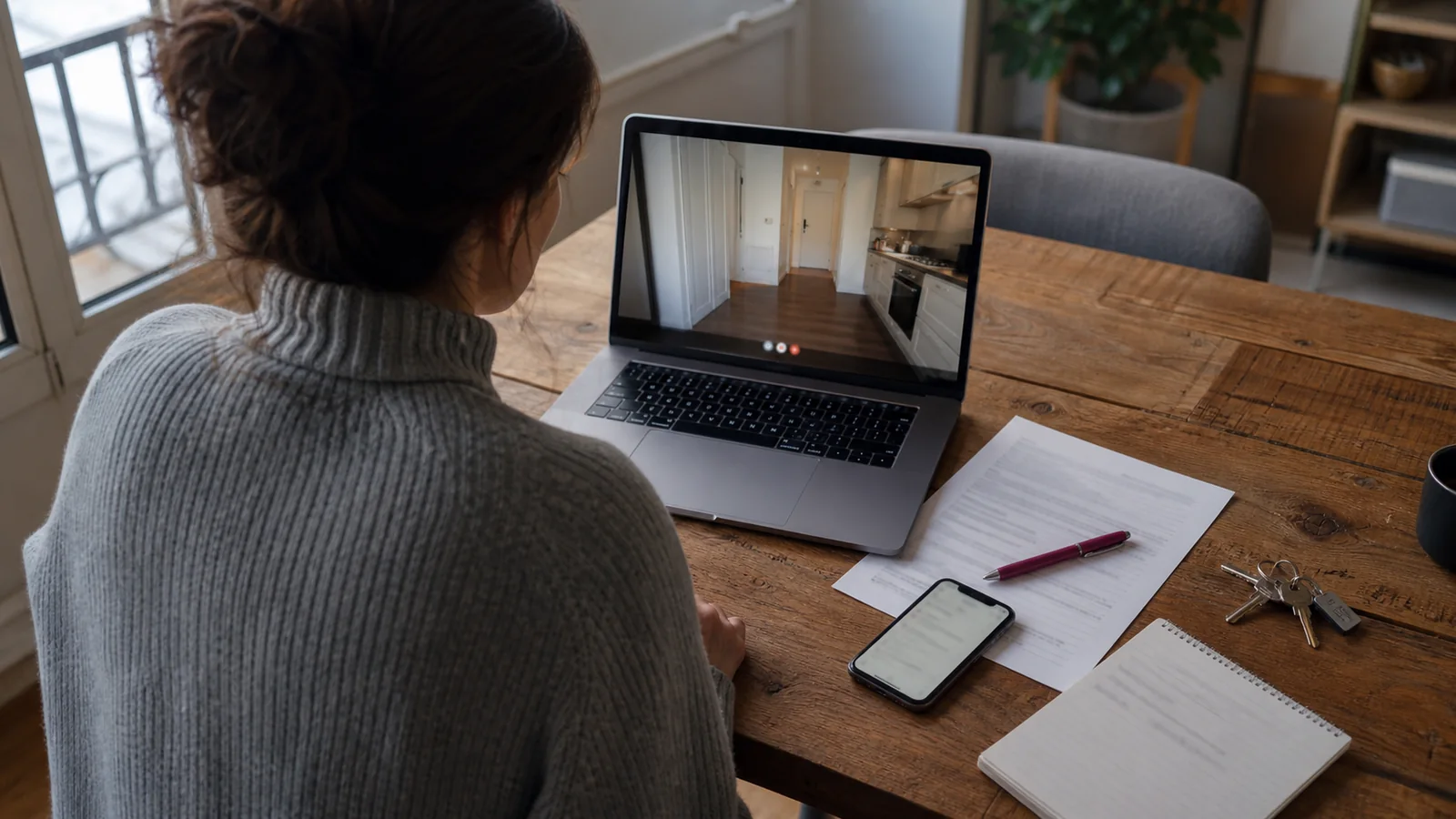
A first-time renter was asked for a deposit on a three-month home without being allowed a tour because the property was occupied. Their question—how to verify the home before paying—anchors this proof-first checklist. Original source · Reddit · r/TravelNursing
A remote booking needs a small chain of proof before money changes hands.
Polished photos can show a real home, an outdated home or someone else’s home. A remote booking needs a small chain of proof before money changes hands.
The pressure is understandable. Your start date is approaching. The listing looks right. Someone else is supposedly ready to book. The person messaging you wants a deposit today.
That is exactly when a remote renter should slow the process down.
The Federal Trade Commission says rental scams commonly use copied listings, false ownership and pressure for money before a renter can verify the property. In its 2025 data spotlight, the agency reported nearly 65,000 rental-scam reports and about $65 million in reported losses since 2020.
The goal is not to eliminate every uncertainty. It is to make the listing, the person, the home and the payment path agree with one another.


The short answer
Before paying for a furnished rental you have not seen, verify the address independently, confirm who is authorized to rent it, request a live walkthrough, read the complete agreement, compare every fee with the invoice and use a traceable payment method tied to the verified business or owner.
If the person refuses ordinary verification but keeps increasing the urgency, leave.
1. Search the address before you search the host
Look up the full address in a search engine and on major rental platforms. You are checking for conflicting prices, different contact names, old sale listings and duplicate advertisements.
The FTC specifically recommends searching the address and comparing contact information. A home appearing in several places is not automatically suspicious; property managers often distribute listings. The warning sign is when the facts do not reconcile.
Also check whether the address and exterior match the neighborhood shown in the photos. Street-view imagery may be old, but the building form, window placement and surrounding structures should make sense.
2. Verify the person’s authority
Ask whether you are speaking with the owner, a licensed manager or an authorized booking representative. Request the legal name that will appear on the agreement and invoice.
Then contact the management company through a phone number or website you found independently—not only through the link sent in a message. If the listing belongs to a known company, the company should be able to confirm the home and representative.
3. Ask for a live, unscripted walkthrough
Recorded video is helpful. Live video is stronger because you can direct it.
Ask the person to begin outside, show the unit number or entry, unlock the door and move through the home without cuts. Have them open a closet, show the view from a particular window, run a faucet and pan slowly around the workspace and laundry area.
This is not about creating an inspection report. It is about establishing that the person can access the home now and that the layout matches the listing.
4. Read the agreement before sending funds
The contract should state the property address, occupancy dates, rent, deposits, fees, utilities, maintenance process, renewal terms and cancellation conditions. Furnished Finder’s lease guidance highlights these same fundamentals and notes that cancellation policies vary by landlord.
Compare the contract, invoice and listing line by line. If the deposit amount or recipient changes at the last minute, stop and re-verify through the independent contact channel.
5. Confirm the home’s daily-life facts
Fraud is not the only remote-booking risk. A real home can still be a bad fit.
Ask for specifics about:
- Shared entrances, walls, yards and laundry.
- Stairs from the street to the sleeping area.
- Parking location and any permit or garage limits.
- Kitchen appliances—not simply “kitchen available.”
- Thermostat control, cooling and bedroom blackout.
- Internet provider and a recent test from the workspace.
- Maintenance contact and expected response process.
If an answer matters to your stay, put it in writing.
Stop when the story changes
Walk away if the representative cannot access the home, refuses a normal video call, asks for payment to a different person, will not provide a written agreement, or explains every inconsistency with a new emergency.
A legitimate home can be booked by someone else. That is disappointing. Sending money into an unverifiable situation is worse.
Sources and verification
Where the practical guidance comes from.
Official and established sources support the factual claims. Community discussions helped identify the questions people repeatedly ask; they were not treated as proof on their own.