
A travel nurse described stale availability, few landlord replies and the pressure of securing housing before an assignment. This checklist focuses the search on the commute, shift and sleep conditions that listings often leave vague. Original source · Reddit · r/TravelNursing
The wrong apartment reveals itself after a night shift, not at check-in.

A 13-Week Checklist for Commute, Parking, Sleep and Safety
The wrong apartment rarely looks wrong at check-in. It reveals itself at 7:20 a.m., after a night shift, when the bus stopped running or the bedroom will not get dark.
Many travel-nurse assignments are planned around roughly thirteen weeks, though the real contract may be shorter, longer or extended. That makes housing a strange middle distance: too long to ignore daily friction, but often too uncertain for a conventional annual lease.
Search results tend to foreground rent and distance. A workable stay depends on more: the correct hospital campus, the commute at shift-change hours, sleep conditions in daylight, parking rules, laundry access and what happens if the contract changes.
Do not choose the home closest to “the hospital.” Choose the home that protects the routine around your actual unit and shift.
The short answer
Before booking Seattle travel-nurse housing, map the door-to-door trip to the exact campus, test it at your shift times, verify parking or late transit, confirm bedroom noise and light control, and read the extension and cancellation terms. Treat laundry, cooking and personal security as operating requirements—not amenities to think about after arrival.
1. Confirm the campus, not just the health system
Seattle hospital names are easy to compress in conversation. The addresses are not interchangeable.
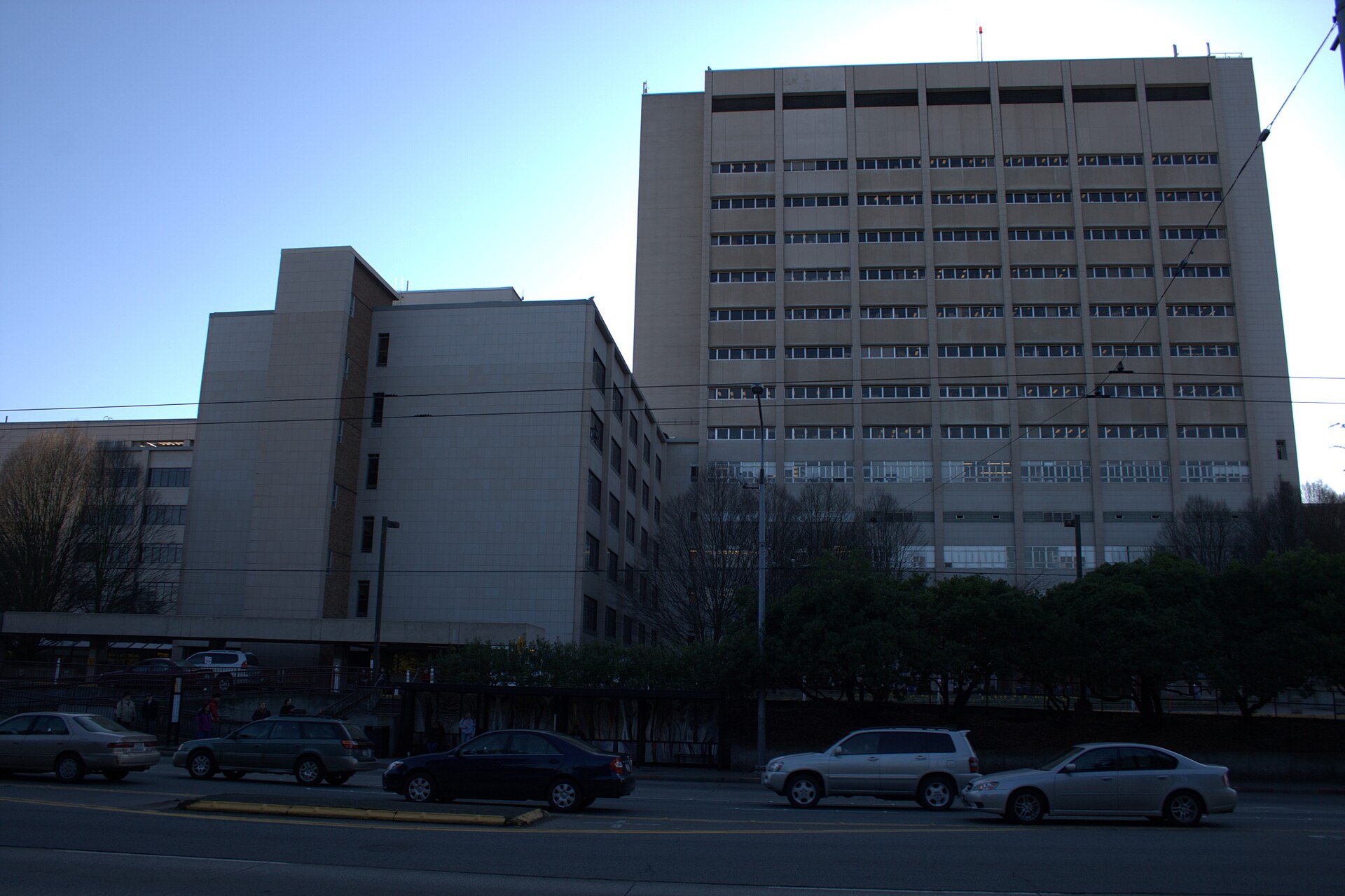
UW Medicine alone lists Harborview Medical Center at 325 Ninth Avenue, UW Medical Center–Montlake at 1959 NE Pacific Street and UW Medical Center–Northwest at 1550 North 115th Street. Swedish First Hill and Swedish Cherry Hill are separate campuses. Seattle Children’s Hospital is in northeast Seattle.
Ask the recruiter for the exact report-to address before you search. If you may rotate sites, list every campus and how often.
2. Test the commute at both ends of the shift
A 12-minute midday estimate does not describe a 6:30 a.m. arrival or an 11:30 p.m. departure.
Check:
- Driving time and parking access at your actual shift change.
- Transit frequency before the first shift and after the last.
- The walk from the stop or garage to the hospital entrance.
- Whether bad weather changes the route.
- The cost and reliability of a rideshare fallback.
King County Metro operates some Night Owl service between midnight and 5 a.m., but the useful question is whether the specific route connects your door and campus when you need it.
3. Inspect the bedroom for daytime sleep
“Quiet neighborhood” does not answer a night-shift question.
Ask which direction the bedroom faces, whether curtains truly darken the room, what happens in the building during the day and whether there is an occupied unit above. Look for construction, school playgrounds, shared laundry beside the bedroom, landscaping schedules and garbage pickup.
If temperature affects sleep, confirm who controls it. Portable heaters and fans are not the same as independent climate control.
4. Understand the parking on both sides
“Parking available” may mean an assigned space, street permit, first-come garage or paid hospital lot. Ask for the exact home-parking arrangement and total monthly cost.
Then verify employee parking with the hospital or recruiter. A home can be geographically close and still produce an awkward trip if the employee entrance and approved garage are on the far side of campus.
5. Check the home for thirteen ordinary weeks
Look beyond the bed count:
- Full stove, refrigerator and enough food storage for shift meal prep.
- Private or shared laundry, plus realistic access hours.
- A table or desk for charting, coursework and calls.
- Secure package delivery.
- Pet rules, fees and safe outdoor routine if an animal is coming.
- Storage for luggage, scrubs and equipment.
- A maintenance contact that responds outside normal office hours.
Furnished Finder’s healthcare-traveler guidance emphasizes the same practical tradeoffs: pay package, commute, safety, laundry, pets and quick-moving availability.
6. Read the change terms before the contract changes
Ask what happens if the assignment is cancelled, shortened or extended. Who needs notice? Is the deposit refundable? Can the same home be held for an extra month, or will an extension require a move?
Do not rely on a platform-wide assumption. Furnished Finder notes that cancellation terms are set by individual landlords, while other platforms apply their own long-stay rules.
Sources and verification
Where the practical guidance comes from.
Official and established sources support the factual claims. Community discussions helped identify the questions people repeatedly ask; they were not treated as proof on their own.